
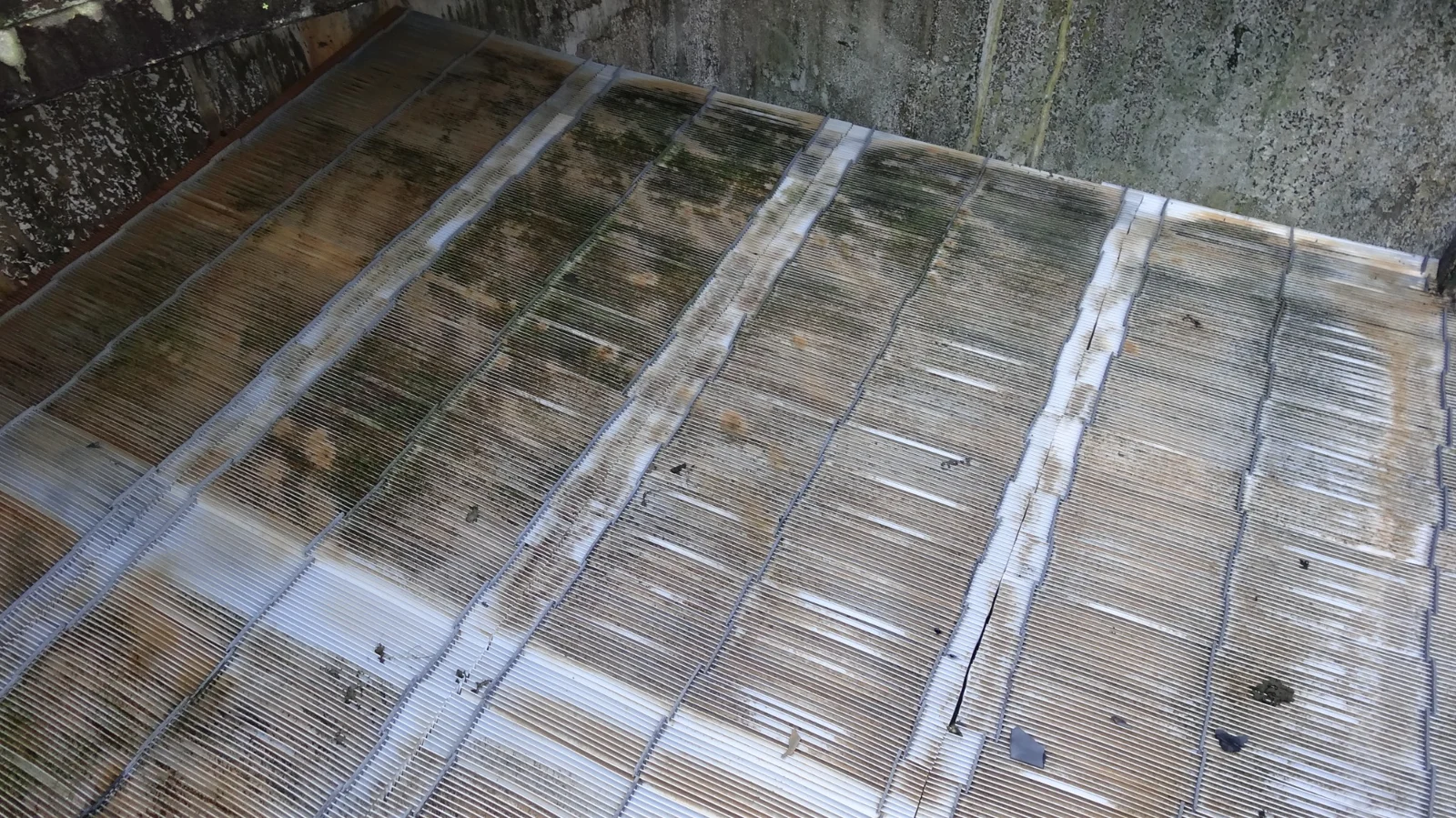
A drift eliminator affects more than water carryover. Its condition and installation influence droplet capture and the air path through the tower. Restricted passages and missing sections are different faults: one may restrict airflow; the other may let droplets bypass the intended collection surfaces.
First, distinguish drift from evaporation
Drift is liquid water carried out with the exhaust air. It can contain the dissolved constituents of the circulating water. Evaporation is part of the cooling process; a visible white plume alone does not establish excessive drift. A DE condition survey should record droplet carryover separately from thermal performance.
What happens when the air passages are blocked?
Engineering interpretation: deposits, debris or deformation that reduce open passages can increase airside resistance. At a fixed fan speed and pitch, the operating point may shift to lower airflow, depending on the fan curve. That can reduce heat rejection or raise cold-water temperature under otherwise comparable conditions. Photographs cannot quantify this loss.
SPX explains that eliminator pressure drop and discharge direction affect the fan and tower performance [1]. It does not follow that every dirty DE causes a higher motor current. A speed-controlled fan may use more power to maintain a duty; a fixed-speed fan may instead deliver less air. Measure the actual operating point.
Where droplets can escape through gaps or broken packs
Cracked, displaced or missing sections, and gaps around the perimeter, can provide a path around the collection surfaces. SPX recommends clear passages, correct installation and intact seals [2]. Check panel orientation, joints, supports and drainage against the installed design. Adding an extra layer without reviewing resistance and drainage can create another problem.
Why the fan deserves an inspection too
Brentwood describes how carried-over droplets can erode fan leading edges and how salts in those droplets can corrode metal components [3]. This is a possible damage mechanism, not proof that DE condition caused a particular fan defect. Water distribution, air velocity, materials and exposure history also matter.
What to record before deciding on replacement
- Condition and coverage: map deposits, blocked channels, broken packs, gaps, orientation and support condition.
- Operating conditions: record water flow, hot/cold-water temperatures, entering wet bulb, fan speed, pitch setting and actual input kW.
- Airside evidence: where suitable access and measurement locations exist, assess airflow and differential pressure using an agreed method. Compare before and after work at comparable conditions.
- Repair scope: consider approved cleaning for sound packs, or replacement where damage and deformation prevent service. Confirm profile, depth, material, drainage and pressure-drop suitability rather than matching dimensions alone.
Plan inspection under the site isolation and access procedure. DE panels are not a walking platform. Use cleaning methods compatible with the material and manufacturer instructions.
Performance claims need measurements
Do not assign a capacity-loss percentage from a stained panel, or apply a product's published drift rating to a different tower arrangement. Drift performance, airflow and thermal performance need their own evidence. Document the observed condition first, then define the checks that will confirm the result.
Manufacturer references
- SPX · XCEL TU Drift Eliminator
- SPX · Cooling Tower Inspection Tips · Drift Eliminators
- Brentwood · How Drift Can Affect Your Process & Components
General engineering guidance. Photos do not establish a failure cause, remaining strength or a performance rating. Apply the installed equipment manual and actual inspection findings.